
Free shipping on USA orders over $129!

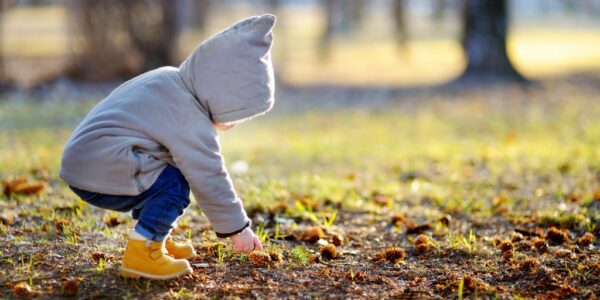
Have you ever noticed that the question When? has many facets? For example, if a person asked, “When should we go to the park?,” the reply could be any number of things.
The person asking might be a mama who has an older soccer player and a newborn in her household. She might be addressing the doctor, asking for help in determining the best age for the newborn to venture out to that practice field: “When should we go to the park?”
Or the person asking that same question could be a dad who is trying to coordinate schedules in a one-vehicle family. “When should we go to the park?” in that situation might mean that he needs to know what time would work best to use the van today and take the children to burn off some energy on the playground.
It’s the same thing when someone asks us, “When should I do nature study?” That question can mean different things to different people.
So we’re going to do our best to address several facets that could be included when a homeschool parent asks that question. We will talk about nature study’s place in your school schedule, what it might look like for different ages of children, and how to handle nature study throughout the seasons.
Nature Study in Your Schedule
For those of you with preschoolers, time outside is vital—the more, the better! You won’t be doing formal nature study at that age, but you will be getting your young child in the habit of spending time outside regularly, looking intently at all that is around him. Charlotte Mason encouraged time in nature every day for younger children.
“It is infinitely well worth the mother’s while to take some pains every day to secure, in the first place, that her children spend hours daily amongst rural and natural objects” (Home Education, p. 71).
For school-age children, your goal is at least one half-day a week outside. Charlotte considered that time to be “an essential condition” of a living education (that’s what the Latin phrase means in the following quote):
“It seems to me a sine quâ non of a living education that all school children of whatever grade should have one half-day in the week, throughout the year, in the fields” (School Education, p. 237).
And when you consider all of the benefits of spending time outside that we discussed last time, it’s easy to understand why she put such emphasis on it.
Practically, it works well to schedule nature study after lunch, when the book work is complete. However, feel free to make adjustments to best fit your climate and the time of year. The temperature in England during an afternoon in June is vastly different from that same afternoon in Georgia. While it is good for children to experience the shift in temperature throughout the year, we also need to keep health and safety in mind.
Your children will likely respond more enthusiastically to spending time outside if the temperature is at least somewhat user-friendly. So when the weather heats up in your area, you might want to spend time outside first thing in the morning when temperatures are cooler. It’s up to you to pick a time that works best for your situation. You have that freedom. Just remember that the goal is to spend a generous amount of unhurried time observing nature at least one day per week.
Nature Study at Different Ages
Begin regular time outside when your child is young. During those early years, the child can keep a nature journal if he wants to, but it should not be required. The main thing is to allow him plenty of time to become familiar with the nature friends around him. Occasionally point out something you notice in nature, but be careful that you don’t overwhelm the child with a flood of talk or force a science lesson. You want the child to grow up with a habit of enjoyable time outdoors.
Charlotte reassured us that it is not the parent’s job to entertain children during time outside. So many possibilities exist in nature for pretend-play objects! If your child has grown dependent on man-made objects for playtime, consider going to a location that doesn’t have a playground or at least starting in the part of the park farthest from the playground, so the child can more easily focus on nature and begin to discover what versatile play equipment nature provides in trees, sticks, acorns, rocks, leaves, and the like.
While playing outside is not formal nature study, it is laying the foundation of the habit and the introduction of nature around the child. And perhaps most importantly, it is teaching the child to care about God’s creation from the time he is very young.
School-age students (ages 6 and up) can be gently guided to intentionally observe nature closely and carefully. Sometimes it works well to have a specific focus in mind; for example, you might go looking for spiders or mushrooms or cloud formations. Those guided studies help provide students with ideas of what kinds of things to look for. The book Journaling a Year in Nature offers guided prompts for every season of the year.
An important part of any nature study is identifying what you are looking at, but keep in mind that learning a nature object’s name is only the beginning. Learning its habits is the goal. Spend time with it, watching and waiting to see what it does. Revisit it to find out what is happening during the different seasons of the year. Over time, your child will get to know that nature friend so well that he will recognize it in other locations too.
Older, more experienced nature students can expand on their studies, focusing on aspects of nature that are of special interest to them. Perhaps an older student has formed a strong connection with flowers and wants to cultivate a flower garden in the yard. Another older student might express a deep interest in birding and want to devote more time to pursuing that hobby. Encourage your students to keep their nature studies well-rounded, but at the same time, areas of particular interest should be nurtured.
Students of school age should keep nature journals—a record of their observations and their growing relation with God’s creation around them. One of the upcoming posts in this series will be devoted to the practice of keeping a nature notebook. We’ll talk about details then.
Nature Study throughout the Seasons
Charlotte Mason spent about an hour and a half outside every day throughout the year. And she encouraged us to do nature study all year long, too, so the children could see the changes that the different seasons bring.
Now, most homeschool parents I talk with can handle nature study in spring and autumn. It’s not too hot and not too cold, and there are plenty of nature things to see. Summer isn’t too hard either; it might only require a change in the time of day that you go outside. But for many of us, winter brings a challenge. Somehow it’s harder to step outside when the temperatures are low and the wind is high.
I have to admit that I used to think that Charlotte Mason had an unfair advantage doing her nature study in the Lake District of England. The landscapes are gorgeous! I would think, Of course, she talked about nature study all year round. Look at all the beauty there. It must have been easier for her than for me.
But then I did some research. Lake District average temperatures usually hover between 45°and 60°F. And while they have little, if any, snow, they have to deal with a climate that is almost always rainy and windy. Every day. In fact, the chance of having a sunny day is rarely greater than 20% year round! Doing nature study in Charlotte’s region of the world was not idyllic. There are challenges no matter where you live.
Charlotte’s challenge was rainy, windy, and cloudy weather most every day, but she didn’t use that as an excuse. In fact, she offered some great ideas for year-round nature study that we can also use, no matter what climate we’re in.
- Keep a nature calendar throughout the year. You can record the children’s observations of all the “firsts” — the first oak leaf, the first snowfall, the first robin, the first ripe blackberries. Then the next year they will know when and where to look for their favorites.
- Do month-by-month studies to follow how the same nature object or location changes as the seasons progress.
- Select a few trees to follow throughout the year. I love how she described this one: “Children should be made early intimate with the trees, too; should pick out half a dozen trees, oak, elm, ash, beech, in their winter nakedness, and take these to be their year-long friends” (Home Education, p. 52).
- In winter months, learn to identify birds and their songs. Charlotte explained that it can be easier to see the birds in cold weather when they come into view more freely to search for food. Hanging a bird feeder will give you an advantage. Keep in mind that many birds leave northern climates when it gets cold, and most birds don’t sing their songs until spring mating season. So you can also use the winter months to study a bird’s identifying features and listen to its songs on a field guide app or website. Then you’ll be better prepared to notice and identify those birds when out in the field.
This post on Nature Study Ideas for Winter will give you more possibilities culled from a variety of sources to help you keep nature study going all year long.
So far in this series we’ve looked at Why and When. Next time we’ll discuss How you do nature study. But don’t just sit and wait for that article. Go outside this week and look at nature around you!
Podcast: Play in new window | Download
In September we begin to see spider’s webs in the early morning dew. We often go out and study the webs, drawing pictures and making photographs. Another thing we do sometimes is to take samples of the webs to make collections. Here’s how:
1) prepare a black poster board of any size, as long as it is large enough to hold the entire web you choose.
2) Make sure the spider isn’t at home. Don’t worry too much about taking the web, spiders make new ones quickly.
3) Lightly spray the web with white spray paint, be very gentle
4) Quickly place the poster board against the web and allow the web to stick to the board. Gently break the strands if necessary that hold the web to the tree or grass.
5) Start small, this method takes practice and patience. And really, the small intricate ones are the most interesting.
One you have the web, you can bring it in and display it, make copies of it by hand, photograph it or make a display of it with other information about spiders.
I like to take my children 1,3,5 and 9 to the forest preserves in our area and walk on the trails.
In the spring and fall in my area, near Rockford IL, the is a bird banding station. They catch migrating birds, band them or record band numbers, then release them. My old 2 children love to go and take part in the process.
I do find it hard to do nature study each day.
Hi. Love this subject! Among the ideas you have already mentioned, I love to bring nature, or produce, to the dining room table on a rainy or freezing cold day and invite the children to the table to draw or colour, or paint, the nature still life in front of them. Even if reluctant, they always produce (no pun intended) beautiful results.
Also, after watching the new movie “Miss Potter” based on the true life story of Beatrix Potter, I would highly recommend. Nature study rings loud and clear. Nature videos that you can “pause” to draw scenes are fantastic too. And photographing nature.
Christine
Hi. I live in the UK. We have found this website very helpful when doing Nature Study http://www.naturedetectives.org.uk/
Many thanks for your wonderful website (I have just bought several Ebooks!).
Love Laura
I am nature-challenged in Miami, FL. I live in the suburbs and it’s soo hot and humid that you can’t be outside unless you’re in the pool, the heat begins at 7am!. The area has lost soo many trees to the frequent hurricanes, they are becoming very sparse. We have a year round issue with mosquitoes. My toddler doesn’t care for our observations, so even when we do try to get out there, I’m usually chasing her. So, I really struggle to make nature study possible and something to look forward to.
The Lord is good, though. For the past two weeks we have been hand feeding a baby dove that fell out of our TALL royal palm. We are raising 6 hens for eggs. We have a Mullberry bush that is fruitful. I need to make the most of our winters for outdoor time and nature observation.
I’ve learned of some Journey classes (Journey North–tracks migration of different animals, signs of spring, and daylight hours). We are going to study astronomy this fall and that should be interesting! But it is challenging to track the season changes in nature here. The trees just don’t change much! I’m trying to bloom where I’ve been planted and make the most of our nature here. When we’re stuck inside we watch our Moody Sciene videos.
Grace & Peace,
Betty
@Heidi: We live in the same area. Where do they do the bird banding? That might be something we would like to check out some time. We can also add it to the CM Destinations page so others can find it.
You might also enjoy White Pine Forest State Park, which isn’t too far away. They have some nice trails with shallow streams you get to cross on stepping stones. We’ve spent a lot of time there walking, observing flowers and trees, wading, chasing tadpoles and crayfish, and just enjoying being outside. It’s one of our favorite places for a picnic and an afternoon of fun.
@Betty: It’s funny, we were down in FL last year and found ourselves somewhat envious of the nature resources you have with the ocean nearby. We had a great time learning about tides, watching the birds diving for fish, collecting shells, and digging up and observing the little crabs that burrow into the sand. Oh, and we had never seen armadillos before that trip, either. 🙂
Being outdoors in nature is so therapeutic for everyone! I have seen first hand with my children, especially my son, the awesome benefits of giving them as much time as possible outside. I would, however, love to learn more things to do in the winter time, and how to make it more feasible to spend more time outside even though it’s cold!
Christine, I loved your idea of drawing nature still life! If you don’t mind me asking, what are Nature study rings? God’s blessings, Melissa
I am a new homeschooler- 4 weeks now! My 11 year old daughter suggested that we take pictures of a few locations at a part nearby at each season and compare/observe how the same location looks. The nature walks have been so relaxing…all 3 of my girls have enjoyed them! We live in North Carolina so we get the 4 seasons.
I’d welcome ANY ideas that might make it enjoyable for a “new” outdoor mom and 5-year old to be in 90 degree heat, 90 percent humidity and being swarmed by insects constantly! Is there a limit to what CM thought would help a child savor nature versus want to run back into the house? (I also thought the air conditioning sounded pretty great, I have to admit!) Thanks!
PS Similar comfort issues arise for us in sub-zero winter weather, so I’m also open to ideas there.
Nancy, I can relate! It’s been over 100 degrees F here in Georgia lately with sweltering humidity. Two thoughts come to mind:
Adjust what time of day you are outside to take advantage of the best conditions. For example, this time of year we’re trying to get outside in the early morning before the sun gets high enough to beat down on us. Then in the winter months, we switch to mid- or late-afternoon to give the sun plenty of time to warm things up out there.
Ease into it enough that you can enjoy it. The purpose of nature study is not to count how many mosquito bites you can get in an hour 😉 The purpose of nature study is to cultivate a love for nature and an interest in it. If conditions outside are making it an unpleasant and unenjoyable experience, don’t force it. Maybe during the hot months you and your child can ease into things by tending a container garden or potted flower that requires only a few minutes outside (thus decreasing your sweat and insect factors!) but still cultivates a love for nature and how things grow. As your child’s (and your) interest and love for nature is nurtured, you’ll probably find yourself spending more time outside because you want to, not because you have to.
Bottom line: Relax and make adjustments as desired so nature study will be a pleasant experience, something both you and your child can enjoy.
GREAT advice, Sonya! I think when I look at the big picture and see how God has provided some unique nature experiences for our family (raising hens, raising a baby dove, we are planting flowers now as most flowers don’t make it through the summer heat), we are learning and enjoying nature, just in a different way for this season. I need to remember that and enjoy what we study.
Blessings,
Betty
Dear Melissa L.
Sorry for my incomplete sentence re: “Nature study rings loud and clear…” (comment 9 messages above). I meant that in the new film about Beatrix Potter there is an atmosphere of rich, pleasant surroundings mixed with Beatrix’s love of capturing it.
However, speaking of rings, this week we have discovered a new little nature study. That is counting the rings on thinly cut pieces of logs. You can do that inside or outside, and the number of rings indicates the age of the tree.
I am a new CMer and have fallen in love with the idea of Nature Study. We often go for walks and just soak in our surroundings, but the idea of taking notice of things has really helped me with my little ones. I have a 5 and 3 year old. A few weeks ago we walked all through our neighborhood and collected leaves from different trees. We talked about how each tree looks different and even blooms differerent “flowers”. Which brought us to the fact that even pine trees have flowers.
We had a lot of fun bringing the leaves home and finding the names of the trees that they matched.
I love all of your ideas. I have never thought about the clouds, and watching the bugs. I know my girls will enjoy that.
Bette,
I can relate as we live in AL where the temperatures have been over 100 degrees for 2 weeks in a row now with no rain for months. We are in a terrible drought here and no one wants to go outside (especially me!) at all. But there are still ways to experience nature…
We have a hummingbird feeder in front of our living room window and love watching the little birds chasing each other around to protect “their” feeder. Our little one calls them “hungry birds” as she can’t quite say “hummingbirds”.
We also have a bird bath and bird feeder outside this same window and we enjoy watching the birds come to feed and bathe. We have enjoyed watching the smaller birds as they seem to “feed” the other birds by throwing seed on the ground for the ground feeders. We don’t have a great variety of birds but we all get excited and have to look up any new bird that comes along.
Doug had some great ideas for exploring the beach. I’m not sure how far away you are from it but one place we enjoyed while down there was John Lloyd State Park on the beach in Ft. Lauderdale. No condos and the most beautiful Austrailian Pines with their wonderful sound when the wind blows through them and their unusual “needles” that are jointed which affects their sound. I have a friend in the keys who is taking her children out to explore the beach as often as possible while studying Jeannie Fulbright’s Exploring Creation with Zoology, Swimiming Creatures of the Fifth day.
We will be using Jeannie’s Exploring Creation with Botany and one of our first projects is to make a light box out of a cardboard box to grow plants in. With the project on dissecting flowers you can use lilies from the grocery store.
There are many ways to enjoy nature. Hope some of these ideas help!