
Free shipping on USA orders over $129!
Simply Charlotte Mason Homeschool Curriculum
The planning is already done for an enjoyable Charlotte Mason education!
Your children deserve an education full of enriching ideas, the best books, and exciting discoveries. And with the Simply Charlotte Mason homeschool curriculum, you can rest assured that you have a thorough, delightful plan ready for you and your children to enjoy.
What is Charlotte Mason homeschooling?
Charlotte Mason homeschooling gets its name from Charlotte Mason, a British educator who revolutionized education in England in the late 1800s and early 1900s. Her approach respects and teaches the child as a whole person, using rich literature and real objects to present ideas through a variety of methods based on the way we naturally learn. Lessons are also designed to reinforce lifelong good habits such as attention and best effort.
Family Style Homeschool Curriculum
Our curriculum combines all ages together for as many subjects as possible. By covering the same topics with all your students together, you’ll build lasting family bonds through shared connections over history, great art, literature, and more. You’ll also save time and money with shared class time and books.
You can combine your children across grades levels whenever a subject is topic-based. Only a few subjects are skill-based, where skills must be learned in order. Here are some examples:
| Skill-based subject: Math | Topic-based subject: Art Appreciation |
|---|---|
| Topics: Addition Subtraction Multiplication Division | Topics: Michelangelo Renoir Giotto Cassatt |
It doesn’t matter what order you study different painters, so your whole family can enjoy learning about the same artist together. Your whole family can study the same time period in history, with older students branching out with additional assignments. However, each student needs to build skills in a subject such as math at his or her own pace, so those skill-based subjects are done individually.
Charlotte Mason Homeschool Lesson Plans
Our open-and-go lesson plans make it simple to enjoy homeschooling the Charlotte Mason way! Each lesson plan in our curriculum schedules a wonderful mix of modern and classic books, carefully hand-picked from a Christian worldview. In every plan, you’ll find a complete year’s book list, a daily itinerary that tells you what to do for each lesson, teaching tips to help you apply Charlotte Mason principles to a modern home school, end-of-term exams, and more!
We’ve divided our curriculum into three series of plans so you can customize to fit your needs.
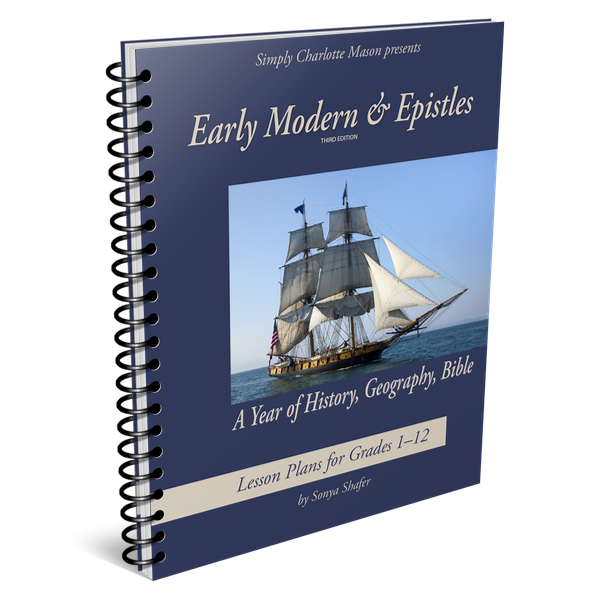
History, plus Geography and Bible Study
Our six-year history cycle is a fascinating journey from Ancient Times through Modern History. This unique approach brings Bible history into the Ancients so your students understand where the Scripture narrative fits into world history. Geography studies focused on people and places breathe life into understanding the world we live in. And Bible study lessons guide student in building the skills needed to read and understand God’s Word for themselves.
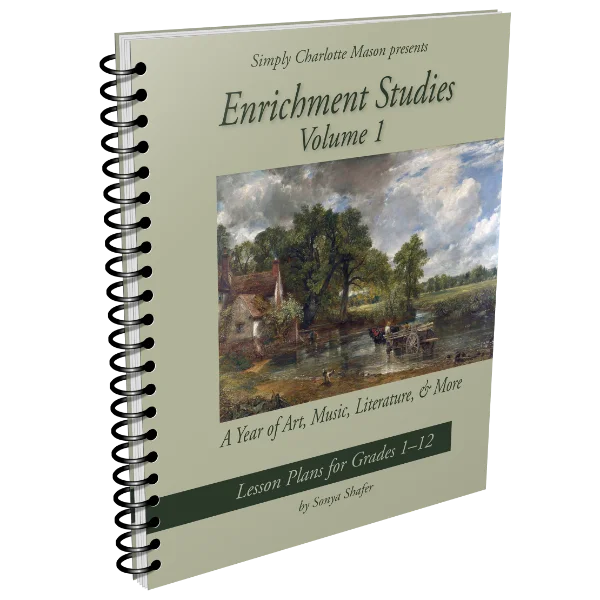
Enrichment Subjects
Sometimes these subjects are called the humanities, but we prefer to call them enrichments because they bring your home school to life! Go beyond the basics with subjects like art, music appreciation, poetry, and good habits. Twelve interesting subjects for your whole family to enjoy are scheduled, but with Charlotte Mason methods it will only take you about an hour per week! Many families say enrichments are their favorite part of homeschool!
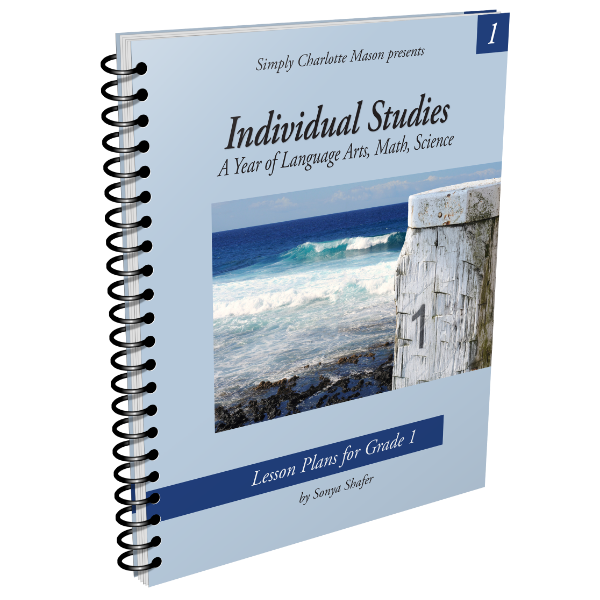
Math, Science, Language Arts
These are the skill-based subjects that need to be done individually at each student’s grade level. Grab the plans for the grades your students are in this year.
Sample schedule
A Charlotte Mason homeschool day is like a bountiful feast of great ideas and a variety of interesting subjects for your children. The best part? Because the methods are taught in a way that encourages full attention, lessons don’t drag on endlessly — many families finish formal lessons by lunch! This sample weekly schedule shows how doable it is.
| Monday | Tuesday | Wednesday | Thursday | Friday |
| Scripture Memory (5 minutes) History (20–30 minutes) Picture Study (10 minutes) Foreign Language (15 minutes) Literature (20–30 minutes) Math, Science, and Language Arts at each student’s level (20–30 minutes) | Scripture Memory (5 minutes) History (20–30 minutes) Music Study (10–15 minutes) Habits (10 minutes) Literature (20–30 minutes) Math, Science, and Language Arts at each student’s level (20–30 minutes) | Scripture Memory (5 minutes) Poetry (5 minutes) Geography (10 minutes) Handicraft or Art (20–30 minutes) Literature (20–30 minutes) Math, Science, and Language Arts at each student’s level (20–30 minutes) | Scripture Memory (5 minutes) Bible (20 minutes) Hymn Study (5 minutes) Shakespeare (20 minutes) Foreign Language (15–20 minutes) Literature (20–30 minutes) Math, Science, and Language Arts at each student’s level (20–30 minutes) | Scripture Memory (5 minutes) Bible (20 minutes) Nature Study (30 minutes) Habits (10 minutes) Literature (20–30 minutes) Math, Science, and Language Arts at each student’s level (20–30 minutes) |
Get Started
It’s simple to build your family’s school year with our ready-to-go lesson plans.
Step 1: Select your plans
Choose from our three series to customize your plan. Pick
- one history guide;
- one enrichment guide;
- each individual studies guide for the grades your students are in this year.
Not sure what to pick? Try one of the suggested school years below, or get in touch and our friendly team will be happy to help you decide what fits your family best. You can even book a free video call for personalized help!
Suggested School Years
Ancient Egypt + Enrichment 1
Start at the beginning with Ancient Egypt and Enrichment Year 1. Just add Individual Studies guides for your students’ grades and you’re ready to go.
Plans needed:
- Genesis through Deuteronomy & Ancient Egypt
- Enrichment Studies, Volume 1
- Individual Studies for your students’ grades
Middle Ages + Enrichment 2
The Middle Ages is an exciting time period that children find fascinating. You’ll also enjoy Enrichment Year 2 and the Individual Studies for your students’ grades.
Plans needed:
- Middle Ages, Renaissance, Reformation & Epistles
- Enrichment Studies, Volume 2
- Individual Studies for your students’ grades
Early Modern + Enrichment 3
Start your children in the time period where the history of their home country begins. Plus enjoy Enrichment Year 3 and the Individual Studies for your students’ grades.
Plans needed:
- Early Modern & Epistles
- Enrichment Studies, Volume 3
- Individual Studies for your students’ grades
Step 2: Gather your resources
Use the complete book list in the front of each guide to gather the books you need for the school year. We’ve given you lists for each of three 12-week terms so you can gather materials as you go, or you can use the full year’s book list and gather everything at once. To help you save time and money, you’ll find a breakdown of which books to look for at your library and which ones can be downloaded for free.
Tip: A complete book list for each of our lesson plans is available in the free sample so you can see the books you’ll need to gather.
Step 3: Enjoy a delightful Charlotte Mason education!
Now that you have your books in hand, complete one lesson from each guide per day. It’s that simple!
Prefer to Plan Your Own Curriculum?
If you want to build your own curriculum plan, we have some great resources to help smooth the way. Check out our Build Your Own Curriculum page for free sample schedules, book lists, and planning help.