
Free shipping on USA orders over $129!

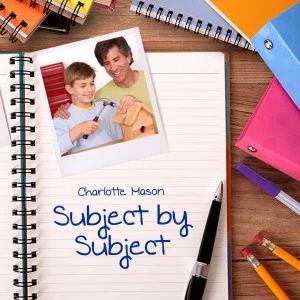
The more time you spend around the Charlotte Mason Method, the more you come to realize what a nicely balanced approach it is. CM is not all books and narration; Charlotte also recognized the importance of working with your hands.
There is much to be learned in working with one’s hands to create something of use and beauty. Charlotte selected a handicraft for her students to learn each term.
We like to combine handicrafts and life skills in our home school, because there is often overlap between the two categories. For example, sewing—is it a handicraft or a life skill? Both. So feel free to select both handicrafts and life skills for your students to learn.
And don’t be afraid of working with a variety of materials. Charlotte’s students worked in clay, wood, brass, iron, leather, fabric, food, and more.
Whichever skill or material you are working with, keep in mind these four main principles:
- The children “should not be employed in making futilities.” Make sure the project is useful.
- Teach the children “slowly and carefully what they are to do.” Allow plenty of time for the children to learn the skills step by step and to do them correctly.
- “Slipshod work should not allowed.” Encourage careful work and best effort right from the beginning.
- “Therefore, the children’s work should be kept well within their compass.” Select a handicraft and a project that will challenge but not frustrate.
As far as scheduling goes, handicrafts don’t always fit well into short lessons. It might work well to schedule handicrafts during the afternoon when the children have plenty of time to get out the supplies, learn the next step, practice until they are satisfied they are doing it correctly, and see progress on the project. Oh, and clean up!
If you are looking for help with handicraft skills or project ideas, our Handicrafts Made Simple videos might be just what you need. Each video starts with the basics and gradually increases the challenge, with practical projects tucked in all along the way. The included booklet outlines a suggested schedule for a 12-week term of handicraft work, so you can focus on enjoying the new handicraft along with your children.
Handicrafts are a great way to help your students discover talents they didn’t know they had and cultivate a habit of working with their hands to create useful objects in the home—all part of a generous Charlotte Mason curriculum.
New Language Arts Video
Confused about the Charlotte Mason approach to language arts? Take a look at the new video in our Learning Library: The Natural Progression of Language Arts. Sonya clarifies the subject and walks you through the natural process that is built into Charlotte’s methods.
Podcast: Play in new window | Download
On your list (which is fantastic) that you linked, I saw robotics. That would be something that my son would love (and I would never have thought of as a handicraft).
Do you know of any resources for this topic?
One of the easiest ways for kids to get started in robotics is with the Lego Mindstorms robotic kits.
I was afraid you’d say that, LOL! That was the only one I know about and it is $$$$$
I was hoping for something more reasonably priced 🙂
We are looking into robotics for our 8yo boy. But here in South Africa it is not easily accessible in the rural areas. We have found a book on The Bookdepository that are basically for ‘dummies’! Lol! We’ll learn with him then. The ultimate goal of this particular book is to teach the basics of robotics and to teach one how to build a working robot with fairly easily available parts. The LEGO brainstorm is a bit advanced for him (and us) but most probably our next step!
We will be officially schooling CM’s way this coming year, been messing around until now but quite excited and scared! The handicrafts has been a concern although I’ve started teaching my boys things like knitting and cooking as well as gardening. And other household things. More for interest than equipping but reading this article, I think I should change my motivation and approach.
Thanks for this article. Great help.
4-H is a great resource for handicrafts. We have Mini 4-H in our area(for Kindergarden to 2nd grade) so they can do it all through their school years. They give you handbooks to use that start with the absolute basics – and go up by levels/grades. You can probably download the record books without signing up for 4-H, they won’t mind. 🙂
Keepers of the Faith has books for boys and girls with tons of ideas for handicrafts along with instructions.